There’s a reason why plungers are sometimes referred to as “plumber’s friends.” If you have a slow drain, plunging it should be the first step for clearing the clog. Whether it is in a sink, shower or toilet, skip the chemicals and grab the plunger. Here is your plunger guide.
Generally speaking there are two types of plungers, the toilet plunger and sink plunger. The defining difference? The shape of the cup at the end.
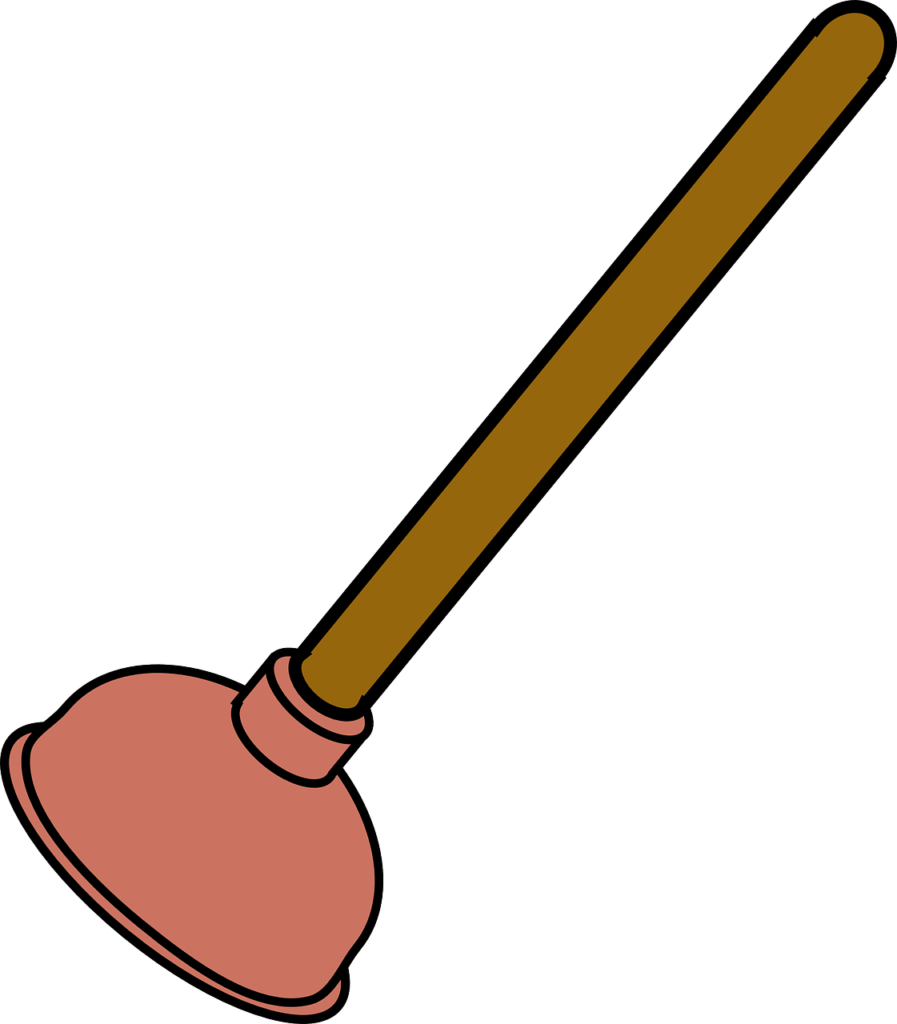 Sink plungers are your stereotypical plunger that you might see plumbers carrying around in cartoons. Most are only a long wood handle and a red or tan rubber suction cup. And they can pack a powerful punch in the plumbing field.
As you may have guessed, sink plungers are made specifically for sinks. The suction cup at the end is flat, almost like a tennis ball that was cut in half. The design allows for much broader uses, as it seals well with flat surfaces like walk-in shower drains, tubs, kitchen and bathroom sinks or even boat bilges.
But let’s be honest here, we all know where plungers are needed most: the toilet.
After a heavy night of beer and burritos, you might find yourself on the porcelain throne in the morning. And perhaps surprisingly, it isn’t usually your personal gifts to the sewer rats that clogs the drain. More often it’s the larger amount of toilet paper required for the “burrito hangover.”

Instead of a circular, flat surface like sink plungers, toilet plungers have an elongated end that creates a better seal on contour surfaces of the toilet. Not all toilets are shaped the same so the extra seal protection allows for a more forceful push when clearing a drain. Many, though not all, allow the elongated part of the seal to roll back into itself to also double up as a sink plunger.
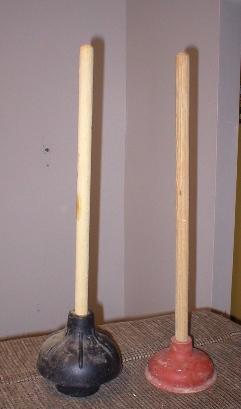
For both designs, there are a slew of variations that provide mixed results.
We can narrow down plungers even further by their action. By “action” we mean whatever is propelled to clear the clog. The basic designs all use the existing drain water to clear a drain. Since water is an incompressible liquid (this is a main premise of hydrodynamics), it can be more effective compared to other action types.
A clogged drain usually occurs where there is a water outflow like a faucet, shower head or toilet. If that is the case, then your basin (sink, tub, etc.) will fill up and voila! You have your water for clearing the blockage.
I’m sure you have all seen situations where you flush your toilet and all of the water is gone from the bowl. This can be caused by a slow drain that causes a siphon effect on your drain. In those situations you can either auger the drain or use an air action plunger.
Air action plungers look like bike pumps attached to the plunger suction which serves to remove (or add) air from the drain line. You pump it while the seal stays in place and the decreased (or increased) pressure force the line to clear.
In either action type, the plunger works by alternating between creating positive and negative pressures in the drain line. As you push down on the plunger, you effectively shoot water or air through the line pushing towards the blockage. A little more pressure may help break up the clog but more likely, the pull back up (negative pressure) is what will loosen the debris enough to fix the problem. Either way, a few pumps on the plunger should do the trick if a plunger can handle the job.
There is no sense in plunging a drain for more than about 10 pumps. If that doesn’t work then it’s time to move on to plan B: the toilet auger.
To use a water action plunger, make sure the basin is filled with water. If it is not, use a bucket to fill it. Place your plunger in the basin and work around to get all of the air out of the suction cup. Place over the drain and get a good seal. Then, push the plunger vertically downwards and lift up repeatedly, making sure you maintain the seal from the suction cup and drain at all times. Once the blockage is cleared, you will notice the water draining out as it is supposed to.
If you are unable to clear the clog or if you still have a slow drain, try augering the line or call a professional.
I check out blogs on allowing senior citizens live safely
at home a lot but I’ve never been compelled to post a remark, up until now.
Fantastic article. I enjoyed reading it. I’ve bookmarked your site and shared this post on my Facebook wall.
Thanks once again for all you are doing!